

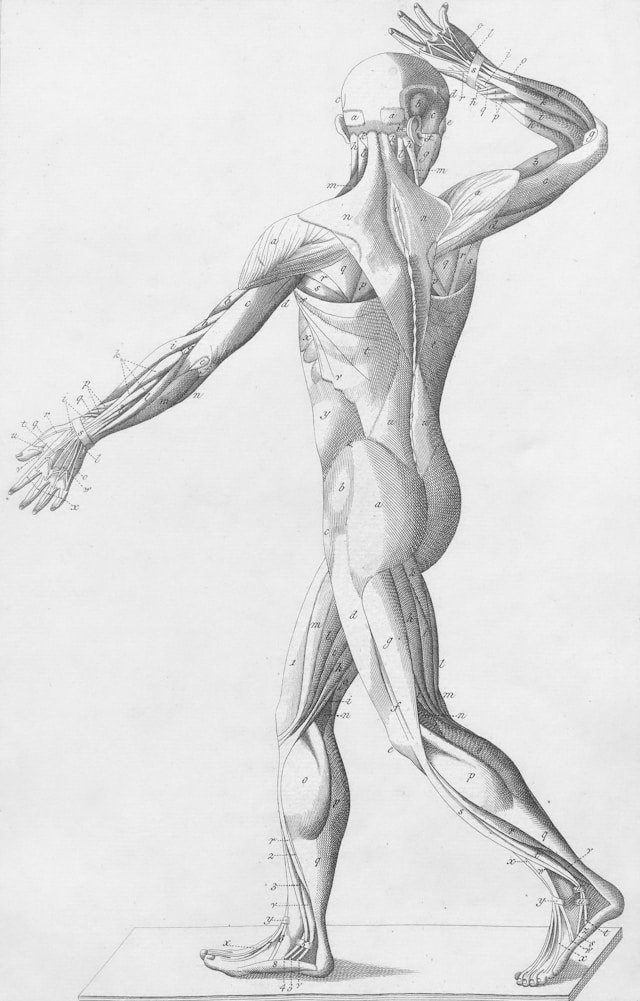

An understanding of anatomy is fundamental for fitness trainers, physiotherapists, and educators in various health-related fields. Mastering anatomy enhances one’s ability to communicate effectively, assess movement patterns, and provide tailored instruction. The ability to visualize and understand the human body allows professionals to make informed decisions and develop treatment or training regimens that optimize performance and recovery. This article explores anatomy skills that can significantly elevate professional capabilities and outlines the continuous learning opportunities available to expand this vital knowledge base.
https://unsplash.com/photos/HpUNxc4Rcu4
Basic Anatomical Terminology
Grasping anatomical terminology is the cornerstone of any anatomical skill set. Understanding terms like superior, inferior, anterior, posterior, medial, and lateral can prevent miscommunication among working professionals, particularly in healthcare environments. These foundational descriptors help establish clear communication regarding the body’s layout, enabling practitioners to describe injuries, assessments, or referrals accurately.
Anatomical terminology extends beyond vocabulary to encompass standardized maps of the body. Utilizing a common language streamlines interactions between professionals, such as physical therapists and athletic trainers, fostering a collaborative approach to patient or client care. As professionals encounter different anatomical positions and movements, a sound understanding of this vocabulary becomes invaluable in creating shared treatment or training goals, improving outcomes for clients.
Muscle and Joint Mechanics
Understanding how muscles contract, engage, and produce motion through various joints can lead to better exercise programming that caters to individual biomechanics. The types of contractions, concentric, eccentric, and isometric, play a critical role in developing strength, improving coordination, and enhancing performance.
An understanding of major joints, such as the shoulder, hip, knee, and ankle, allows professionals to prescribe effective exercises that enhance joint stability and mobility. Limited or excessive movement at these joints can lead to injury.
Understanding the mechanics helps prevent such issues. Professionals may consider a comprehensive Anatomical Position course to deepen their understanding of muscle function and joint roles more systematically. Knowledge of muscle and joint mechanics is important for health and fitness professionals, as it directly influences their capacity to design training programs and rehabilitation protocols.
Understanding Body Planes and Axes
It’s crucial to become familiar with the various body planes and axes that allow for precise body movement analysis. The sagittal, frontal, and transverse planes serve as references for orienting the body and understanding how movements are executed through these dimensions. Each plane provides context for assessing locomotion, identifying asymmetries, or devising targeted corrections in practice.
The anatomical axes, defined along the body, work in parallel with these planes to describe movement patterns more broadly. The sagittal axis, frontal axis, and vertical axis offer additional perspectives on motion, providing professionals with the framework to analyze movement comprehensively. Developing an understanding of these concepts empowers practitioners to assess performance effectively and ensures clients engage in movements that enhance their physical capabilities without injury.
Applying Anatomical Knowledge to Assess Movement
One major application of anatomical knowledge is in observing and assessing movements. This assessment is vital in various contexts, from athletic performance to rehabilitation settings. Professionals must differentiate between normal and dysfunctional patterns by closely analyzing movement dynamics. A well-trained eye can identify compensations and inefficiencies, often leading to effective interventions.
By combining anatomical training with observation skills, professionals can develop tailored interventions aimed at improving stability, strength, and range of motion. This integration fosters a comprehensive approach that enhances physical performance while ensuring safety. By leveraging anatomical insights, practitioners can work on correcting improper movement patterns, decreasing the likelihood of injury, and maximizing health benefits.
The Importance of Continuous Learning
Even seasoned professionals in the health and fitness industries must prioritize continuous learning regarding anatomy and movement science. The human body is complex, and advances in research continually reshape the understanding of biomechanics, anatomy, and their practical applications. Enrolling in additional courses or workshops can provide fresh perspectives and deepen existing knowledge.
Professional organizations often provide access to new literature, seminars, and networking opportunities, facilitating ongoing education. This approach should improve client care and outcomes significantly. Engaging with continual education allows professionals to stay updated with the best practices in the field, thus ensuring their interventions are effective and safe.
Integrating Anatomy into Professional Communication
Clear and accurate communication is crucial in any health-related field, and anatomical knowledge provides the foundation for this precision. Whether collaborating with colleagues, discussing treatment plans, or educating clients, professionals must be able to convey information in a way that is both understandable and technically sound. Using proper anatomical language reduces misunderstandings and fosters stronger interdisciplinary teamwork.
This skill becomes valuable when explaining assessment findings or exercise instructions. When professionals can articulate how and why certain movements occur, clients gain a deeper understanding of their bodies and feel more confident in the process. Effective communication rooted in anatomical knowledge enhances trust and engagement between professionals and the individuals they support.
https://pixabay.com/photos/skeleton-human-model-physio-2632153/
Foundational anatomy skills serve as building blocks for professionals across healthcare, fitness, and education. Understanding terminology, body planes, muscle mechanics, and movement assessment enables practitioners to create more precise, effective, and individualized programs. Integrating these concepts into both practice and communication helps strengthen professional credibility and elevates the quality of care or instruction provided.
As research evolves and new insights emerge, continuous learning remains paramount for staying aligned with modern standards in anatomy and movement science. By committing to ongoing education and refining anatomical expertise, professionals can enhance their capabilities, protect client well-being, and stay competitive in an ever-advancing field.