

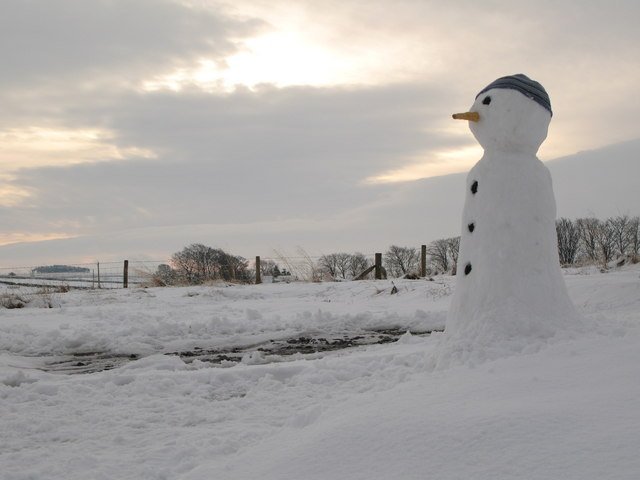

Building a snowman is easy. All you need are three snowballs, two rocks for the eyes, two branches for the arms, and, most notably, one carrot for the nose. It’s a fun winter activity, especially when outdoor activities are limited. While most of the accessories needed to make a snowman can be found outside, why do snowmen have carrots for noses? Couldn’t people find something outside to make a nose for the snowmen? Or do carrots have any cultural significance? Let’s find out.
The Origin of Snowmen

To better understand why people use carrots as noses for snowmen, let’s go a few centuries back. While snowmen are usually built during Christmas, winter wasn’t always associated with the birth of Jesus Christ.
According to ancient Greek Mythology, winter was referred to as “Old Man Winter,” a personification of the cold season. It was believed that unlike other seasons, which go away in a couple of days without affecting the people, winter always lasted longer and was pretty harsh. The Greeks perceived winter by the bitterness and short-tempered personality of an old man. Due to such negative connotations, winter isn’t a season people looked up to.
The modern-day snowman stemmed from another personification of Old Man Winter known as Jack Frost, whose personification was popularized in literary works during the 1800s. According to writers, this movie was rather harsh and portrayed a cold and fierce character. All these attributes contribute to the physical appearance of the snowman.
Because snowmen represent Jack Frost and Old Man Winter, they had to be decorated in a way that they portray the mentioned characters. This is where carrot noses originated. The people believed that giving snowmen pointy carrot noses made them look harsh and brutal. Do not forget that heartless witches were associated with pointy or hooked noses during that time. So, it was a common belief that wicked people had pointy noses.
Why Carrots?

If carrots were chosen because of their pointy nature, one might ask: why carrots in particular? Why not other vegetables like cucumbers, which also share almost similar qualities? Carrots have been around for nearly 5,000 years, mainly growing in Iran, Pakistan, and Afghanistan.
When they were domesticated around the 8th Century, carrots spread to other parts of Europe and Asia. They were a common household vegetable. Because of their high availability, carrots became the go-to vegetable for the snowman’s nose.
Another reason snowmen have carrot noses is that icicles, which were the other alternative, don’t last long. Before our ancestors started using carrots to decorate snowmen’s faces, they would mold an icicle and use it as a nose.
During that time, all accessories needed to make a snowman came from Mother Nature herself. However, icicles would often melt much quicker than the snowman, leaving him without a nose. This is evident from a 15th-century book titled “The Book of Hours”. It comprises of images of snowmen that had icicle noses.
Besides carrots, some would use buttons as noses for the snowmen. There are several reasons why buttons were used instead of carrots as snowmen’s noses. For instance, some people would not have access to fresh carrots in their barns or nearby stores during winter. Also, some kids believed that the snowman would come to life. Therefore, they would be afraid of using carrots because they could fall off when the snowman would spin in a magic whirl while coming to life.
However, buttons, too, didn’t do the job perfectly; they did not actively portray snowmen’s mean-looking faces. Therefore, this option was eventually dropped. That, coupled with the fact that buttons were very expensive at the time, meant most people had no choice but to go back to using carrots.
How the Use of Carrots as Snowmen Noses Spread
Animators are responsible for spreading the idea that snowmen must have carrot noses. The media plays a crucial role in shaping public perception. As much as carrots have been the go-to vegetable for building a snowman’s nose, the press in the 1900s significantly popularized this narrative.
The first snowman to be animated was featured in Der Schneemann in 1944; this character had a carrot for a nose. Additionally, Horst Mollendorf and Hans Fischekoesen portrayed him as naïve, which is different from the harsh character painted by the Greeks.
This animation changed the world’s perception of snowmen; kids started loving them instead of fearing them. After being aired in Germany, Der Schneemann spread to other parts of Europe, popularizing the snowman. With time, more and more kids started asking their parents if they could build a snowman during winter and, most importantly, decorate them with the iconic carrot nose.
Conclusion
Even though people are using paper cones these days as an alternative, carrots are still the number one pick for snowmen’s noses. That’s because carrots don’t just make snowmen look authentic. They are part of a tradition that has been practiced for centuries.