


Historians say bridges date back to ancient civilizations in Mesopotamia, with most built using stepping stones and fallen trees. Their design was pretty simple. However, as technology advanced, so did the architecture of bridges. Today, there are some iconic bridges all over the world that wow even the most skilled engineers. They boast unique designs while still retaining their functionality. Here are the eight most innovative bridges in the world.
1. The Danyang-Kushan Grand Bridge in China
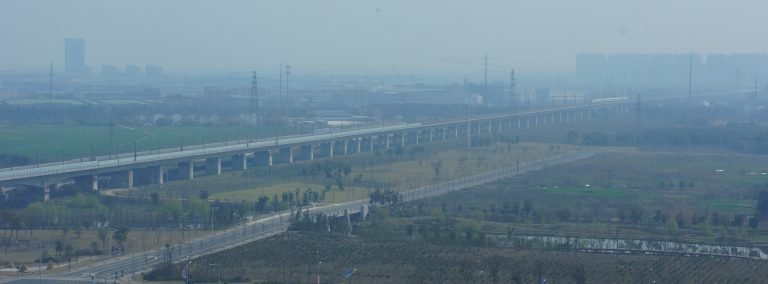
This bridge holds the record for being the longest in the world. It covers a distance of 102 miles, connecting Nanjing and Shanghai. The Danyang-Kushan Grand Bridge was launched in 2011 after being built for several years. Sources claim that its cost was $8.5 billion, and it carries the Beijing-Shanghai high-speed train. This bridge passes through lakes, rivers, canals, and lowland rice farms, thus giving passengers on the speed train an incredible view of China.
2. The Golden Gate Bridge in California, US
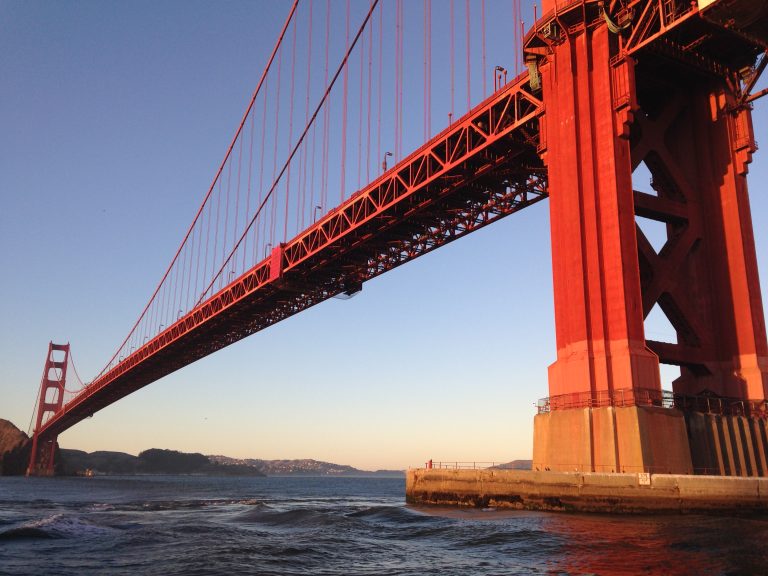
Before the 1960s, the Golden Gate Bridge in San Fransisco was the tallest and longest suspension bridge. Spanning at 4,200 feet, the Golden Gate connects Marin County with San Fransisco. It’s popularly known for its iconic orange-red hue towers that have been featured in films such as Superman, The Sweet Life, and Ground Zero. To date, it remains an engineering wonder that serves thousands of people.
3. The Ponte Vecchio in Italy
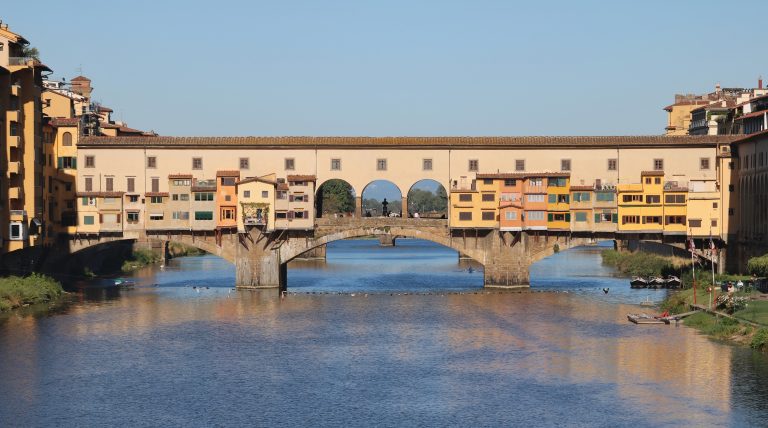
In Florence, Italy, lies the oldest stone bridge in Europe. Even though it’s shorter than most bridges on this list, there are a lot of things that make it stand out. For most people, a bridge is a structure that allows people, vehicles, and trains to cross over an area. Well, the Ponte Vecchio is more than that. It has two storeys that houses people and shop owners. There is even a museum on the east side of the bridge.
The Ponte Vecchio also boasts a rich history as it was rebuilt in 1345 after a heavy flood. Its second storey was added in the 1500s. Interestingly, German consul Gerhard Wolf spared it from destruction during World War II.
4. The Magdeburg Water Bridge in Germany
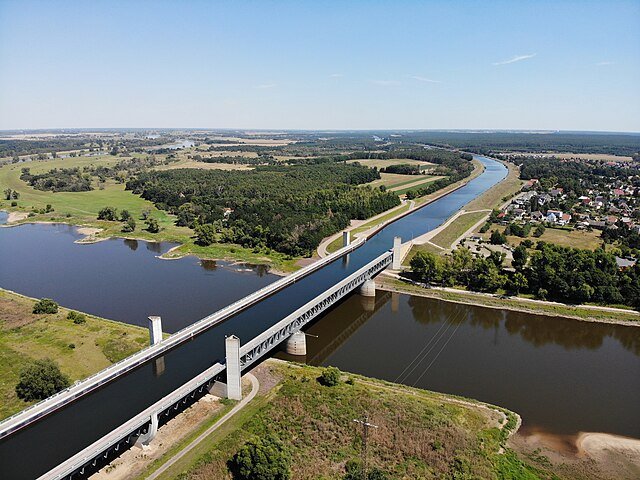
The first thing that makes the Magdeburg Water Bridge unique is that it’s a bridge for boats that connects two water canals along the Elbe River. At the top is a 3,000-foot aqueduct with pedestrian pathways on both sides. The latter is where you’ll find tourists taking pictures.
Beneath the aqueduct is a canal that connects the Elbe-Havel and Mittelland canal, a design that is mind-blowing. The engineers who built the Magdeburg Water Bridge ensured minimal water displacement to avoid splashing. Due to its complex design, the Magdeburg was constructed since the early 1900s and was completed in 2003.
5. Sydney Harbor Bridge in Australia
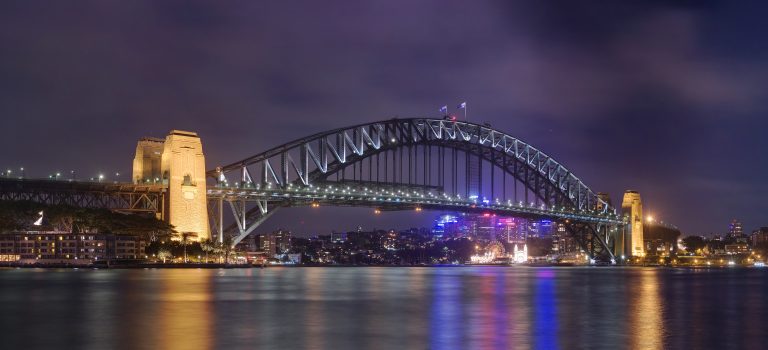
Popularly featured on postcards, the Sydney Harbor Bridge is more than just a landmark in Australia. It is a vital transport link facilitating road, rail, and pedestrian traffic. This bridge is also a popular tourist attraction. There is a ferry ride beneath it, and next to it is the famous Sydney Opera House.
The Sydney Harbour Bridge was launched in 1932. However, approval by parliament was obtained in 1922, and the actual construction started four years later. That means it took 8 years for the bridge to be built, with more than a thousand workers contributing to its construction. The Sydney Harbour Bridge is sometimes known as the Coathanger.
6. Millau Viaduct in France
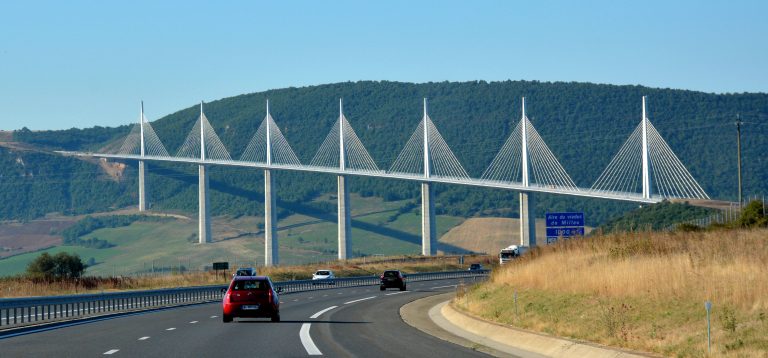
Engineer Michel Vilogeux and Architect Lord Norman Foster did a remarkable job when constructing this bridge. Standing at 343 meters tall, the Millau Viaduct is taller than the Eiffel Tower. On some days, the Millau Viaduct towers above the clouds, making it the tallest bridge in the world.
The architecture of this bridge is so impressive that it won the Outstanding Structure Award in 2006. This bridge was built to make it easier for travelers to drive across the valley from Northern France to the Mediterranean Coast.
In the past, this trip would take at least 4 hours. However, today, motorists can cross in just a few minutes. Because it’s a long bridge, the Millau Viaduct was curved to prevent the floating effect that drivers experience when driving across a long bridge.
7. The Evergreen Point Floating Bridge in the US
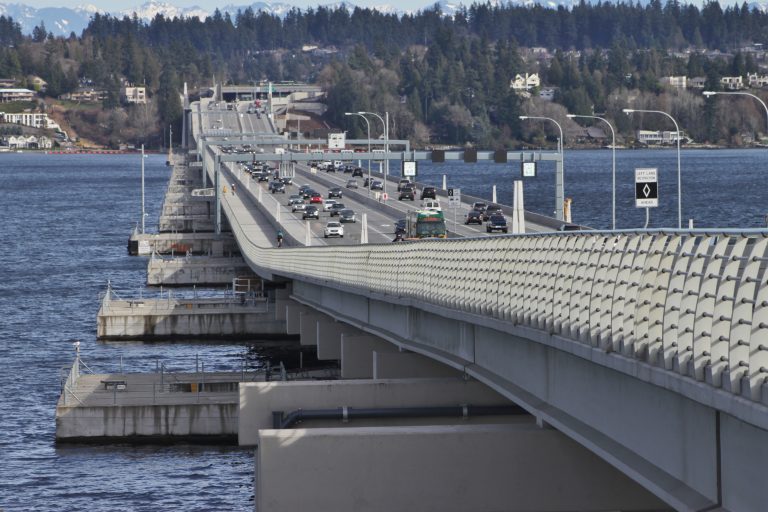
In Seattle, the Evergreen Point Floating Bridge, also known as the 520 Bridge or the Albert Rosellini Bridge, is the longest floating bridge in the world. It measures 7,710 feet long across Lake Washington and connects Seattle to Redmond, Bellevue, and Kirkland.
Launched in 2016, this floating bridge comprises six lanes of road suspended 20 feet above water. Despite being a floating bridge, it’s very safe. It is supported by more than 50 anchors and 77 concrete pontoons. Another important fact about this floating structure is that it’s a toll bridge.
8. Helix Bridge in Singapore
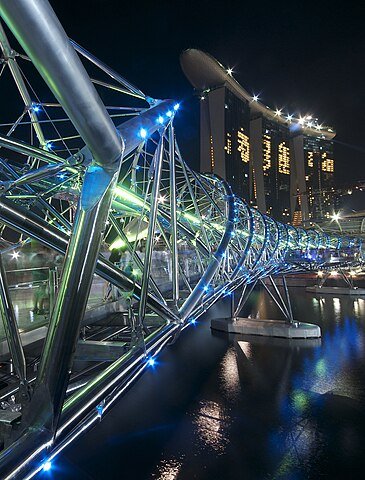
The first thing that draws everyone’s attention when passing through Helix Bridge is its DNA-shaped design. Layers of steel tubes with lights are curved over and under the bridge to create the shape of a DNA sample.
The lights at night reveal white, red, and green colors representing the four sets of DNA. This innovative design has won the Helix Bridge numerous awards. Visitors who want a better view of the Helix Bridge can take the City Skyline or check it out from Marina Bay.