


There’s more to ice than most people know. As it forms on lakes, rivers, and oceans, ice offers many benefits, such as being a source of fresh water and preserving our data for future generations. The simplest definition of ice is water in frozen form. It exists in different forms, including hail, snow, or frost. Besides being used to make your favorite drink a bit chilly, here are some other interesting facts about ice.
1. Persians Used to Make Ice in the Desert During 400 BCE
The tradition of storing ice and using it to store food and prepare certain foods dates back to 400 BCE. During this period, Persians built Yakhchal (an ice house) and ponds next to them. At night, the water in the ponds would be frozen by the extremely low temperatures. The frozen water would then be transferred to the Yakhchal. These ice houses were dome-shaped and had insulation all around. In modern-day Tajikistan, Afghanistan, and Iran, Yakhchal is the preferred term for modern refrigerators.
2. We’re Still Living in the Ice Age
When people come across the term ice age, their minds rush to the one that occurred 2 billion years ago, when human beings covered themselves with animal clothes and mammoths roamed around. However, there’s another ice age that started 3 million years ago, and we’re still experiencing it. Scientists are calling it an interglacial period, which is a period of mild climate within the ice age.
3. People Prefer Soft Ice Over Cubed Ice
There are two types of ice commonly used in the hotel industry. Cubed ice is frequently served in drinks like cocktails and water. However, of late, most customers prefer soft ice over cubed ice. Soft ice is chewy, porous, and melts quickly in the mouth. It’s the ideal choice for flavored drinks and smoothies.
4. Bacteria Can Survive in Ice
Contrary to popular belief, some bacteria can survive in freezers and ice cubes. Examples of bacteria that can survive in these freezing conditions include salmonella, E-coli, and listeria, all of which can affect human beings. In ice sheets and glaciers, bacteria can survive for centuries and even millennia. Homeowners are advised always to ensure their refrigerators are clean to keep off the above bacteria.
5. Ice is a Mineral
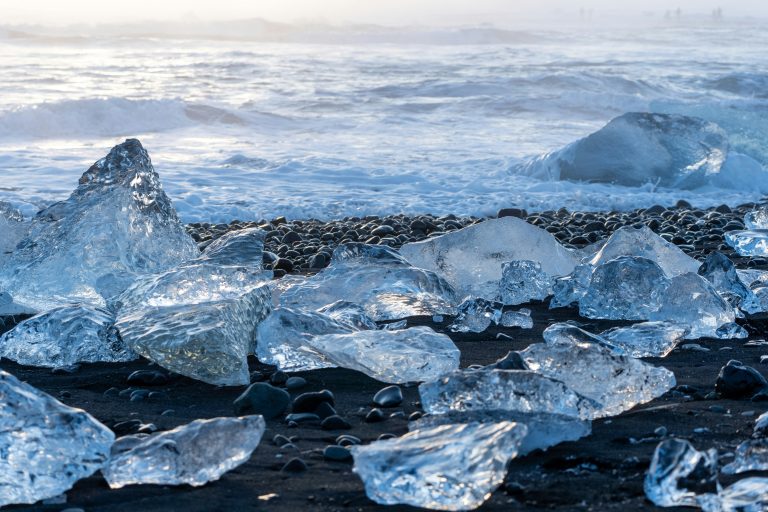
Ice is like quartz, gold, cobalt, aluminum, and copper – it is basically a mineral. That’s because it forms naturally, is solid, inorganic, and has a definite chemical composition. It, therefore, meets all the criteria needed for it to be considered a mineral.
6. The Craving to Chew on Ice is Called Pagophagia
It’s normal to have the urge to chew ice. However, if these cravings become intense, that could indicate a disorder called Pagophagia, often caused by a nutritional deficiency. Excessive chewing of ice is harmful to the teeth. It may also be accompanied by other symptoms such as dizziness, depression, sore tongue, and headaches.
7. Sea Ice Does Not Contain Salt
Even though sea ice is made from salt water, it contains minimal salt; it’s as pure as fresh water. As the temperatures drop on the poles, the water freezes while leaving the salt behind. This causes the sea ice to be as saltless as fresh water.
8. There are Ice Cubes Going for $325
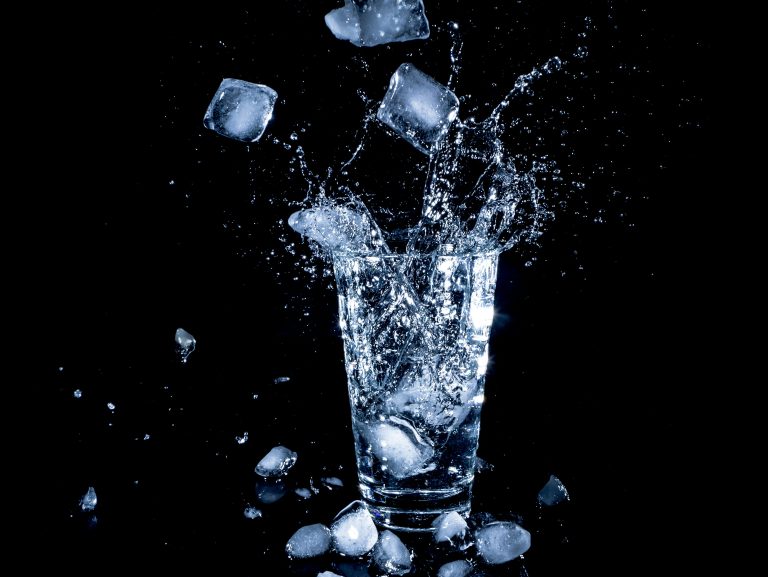
There is a company called Glace Luxury Ice that sells “luxury ice cubes for $325. The packet comes with 50 pouches of ice cubes, and they are available in different shapes, such as spheres and cubes. According to the company, their ice cubes are expensive because they are free of pollutants, additives, and minerals.
9. The White Stuff in Ice Cubes are Tiny Air Bubbles
Nearly all naturally occurring water is oxygenated. When ice cubes are made from tap water, its common for there to be some white stuff located at the center. These are mostly tiny air bubbles trapped as the water froze into ice. It may also contain a buildup of minerals and impurities that were pushed to the center.
10. Ice Used to Be Harvested and Exported in the 1800s
Today, ice can easily be made in the comfort of your house. However, in the 1800s, the locals of New England would harvest ice bricks from lakes and ponds before shipping them to other countries. This was popularly known as the Ice Trade. However, after refrigerators were introduced, it marked the end of this business.
11. The Oldest Ice in the World is 6 Million Years Old
Recently, scientists discovered a glacier of ice in Antarctica, which is 6 million years old. Before that, another group of scientists had found ice which was 3 million years old. There is a race in Antarctica to discover the oldest ice variant possible.
12. Water is Denser than Ice
For those who have always wondered why ice floats on water, it is because water is denser than ice. Despite ice being a solid, the water it lies on has evenly spread molecules. As a result, it can handle the weight of ice on top of it. There are exceptions for heavy ice water. The availability of hydrogen atoms causes the ice blocks to sink in water.
13. Dry Ice Does Not Contain Water
Dry ice has many uses, such as preserving food in areas where refrigerators are unavailable. However, many people don’t know that dry ice does not contain water; it’s made of frozen carbon dioxide. This type of ice can turn into gas at room temperature.
14. Ice Doesn’t Only Exist on Earth
In planets located much further from the sun, like Jupiter and Saturn, there is water which, when exposed to low temperatures, turns into ice. There are also a lot of icy moons outside our planet.