

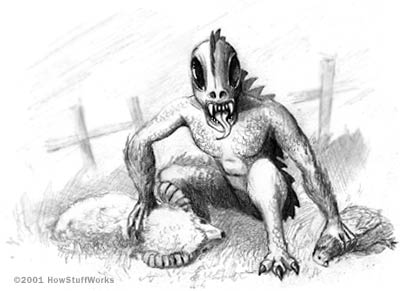

The legend of the chupacabra is yet another example of “I heard from a friend’s friend” or “I am telling you” stories. As the story goes, the chupacabra is a monstrous creature that attacks domestic animals, especially goats, and suck their blood. The name “chupacabra” comes from the Spanish words “chupar” (to suck) and cabras (goats). Chupacabra can therefore be translated to “goat-sucker.” Although this legend started in the 90s, it is still popular today, with tales of its sightings told as recently as last June. So, how true is the legend of the chupacabra? Let’s find out!
The Origin of the Legend of The Chupacabra
In 1975, people from a small town in Puerto Rico known as Moca couldn’t tell what was killing their livestock. Typical to how most humans react to things they have no information about, the citizens were quick to attribute the killings to “el vampire de Moca,” loosely translated to “the vampire of Moca. Others said that a satanic cult was responsible for the event.
It wasn’t until March 1995 that the first livestock killing was attributed to the chupacabra. This was after 8 sheep were discovered dead in Puerto Rico, all with three puncture wounds around the chest area, and their blood “completely drained.” In August of the same year, more chupacabra attacks were reported, with as many as 150 farm animals and pets reportedly killed.
The name “chupacabra” was coined by Silverio Perez, a comedian and entrepreneur from Puerto Rico. Soon, it became popular in the press and was fueled beyond borders when reports of animal deaths came from other countries. These included Colombia, the Dominican Republic, Honduras, Peru, the United States, Nicaragua, Argentina, Brazil, and Bolivia.
What Does The Chupacabra Look Like
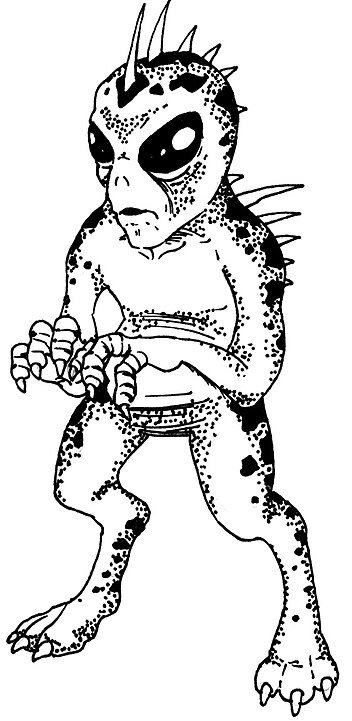
Madelyne Tolentino, a woman from Puerto Rico, provided the first eyewitness account of how the chupacabra looked like in 1995. She said the animal resembled the alien creature Sil from the science-fiction horror film Species. In Tolentino’s account, the animal had spines on its back, its mouth was filled with sharp teeth, and it had large eyes. While this account seemed credible then, the description of chupacabra has hotly been contested over time.
Besides Tolentino’s initial description of the chupacabra, the most agreed upon appearance of the mythical creature is that it is reptile-like. It has leathery or scaly greenish-gray skin and sharp spines running down its back. Others claim that the chupacabra can stand and hop in a similar way to how a kangaroo does.
Is the Chupacabra Real?
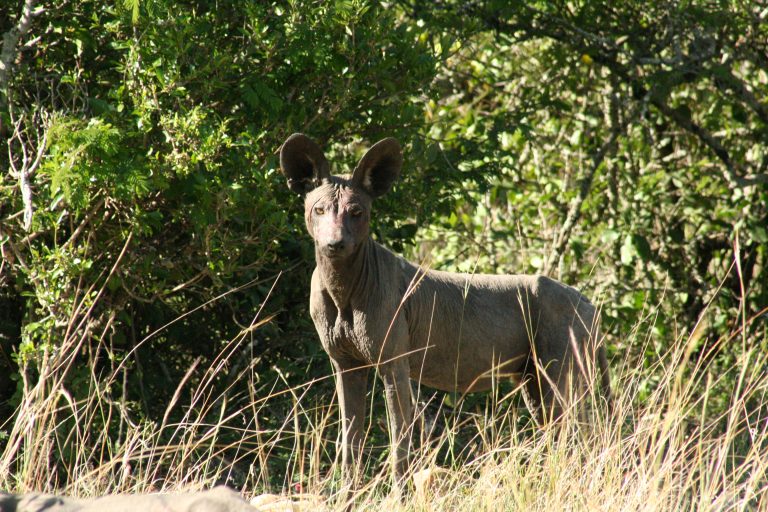
The simple answer to this question is that chupacabras do not exist in the form they are often described. According to a report by Barry O’Conner, a biologist from the University of Michigan, chupacabra reports in the United States were those of parasite-infested mangy coyotes.
The symptoms of the infected coyotes match the description given by the majority of people who claimed to have spotted the chupacabra. Sick coyotes had little fur, a rank odor, and thickened skin. According to O’Conner, the attacks on goats occurred because the sick coyotes couldn’t hunt down rabbits, so it was easier to attack livestock.
It’s also possible that the coyotes can kill but not eat the prey for various reasons, including difficulty in killing the prey or sustained injuries during the duel.
Additionally, the existence of different versions of how the chupacabra looks further casts doubts on its existence. Some people, especially those from Puerto Rico, have reported sightings of a reptilian chupacabra. On the other hand, those from the United States claim the chupacabra is canine. It is hairless, has sharp claws, and greenish-gray skin.
Why Do Chupacabra Stories Persist?
Since the legend of chupacabra started in the mid-1990s, no one has successfully tracked one or provided hard evidence of its existence. So why is the legend still popular despite scientific debunking and lack of proof of existence?
Part of the reason is that most people don’t need significant evidence to believe chupacabra exists. A large footprint, a dead sheep, or a blurry photograph/video does the trick. Also, myths and legends feed on mystery, including the chupacabra one.
As long as a story is told of a completely blood-drained victim but the “perpetrator” can’t be found, the legend will remain alive. Actually, there are higher chances of a myth/legend dying when the mystical creature is spotted/identified than when it remains mysterious.