



Not all criminals rely on force. Some use nothing but charm, psychology, and perfect timing to pull off schemes so effective they leave entire governments, banks, and millions of people fooled. The most successful scams in history didn’t just make money—they reshaped economies, exposed human weaknesses, and in some cases, went on for years before collapsing.
Here are seven of the most successful scams ever pulled off.
1. The Ponzi Scheme That Started It All
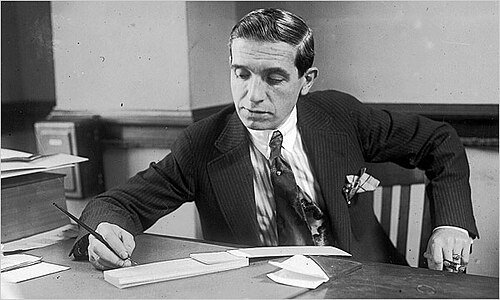
Charles Ponzi didn’t invent financial fraud, but he gave it a name that still exists today.
In 1920, Ponzi promised investors massive returns—up to 50% profit in just 45 days. His idea sounded clever: he claimed to exploit price differences in international postal reply coupons. In reality, he wasn’t investing anything. He was simply paying early investors using money from new ones.
The system worked perfectly… until it didn’t.
At its peak, Ponzi was making millions of dollars a day (in today’s value). Thousands of people invested, convinced they had found a once-in-a-lifetime opportunity. But like all pyramid-style schemes, it eventually collapsed when new investments slowed down.
By the time it was over, Ponzi had defrauded investors of millions and created a blueprint that scammers still follow today.
2. The Man Who “Sold” the Eiffel Tower—Twice
Victor Lustig was a master con artist, but his boldest move came in 1925 when he convinced wealthy businessmen that the French government planned to sell the Eiffel Tower for scrap metal.
Posing as a government official, Lustig invited scrap dealers to a secret meeting. He explained that maintaining the tower was too expensive and that the sale needed to be handled discreetly.
One businessman took the bait—and paid a huge sum, along with a bribe, to secure the deal.
By the time he realized it was a scam, Lustig had already disappeared.
Even more unbelievable? Lustig returned later and tried to run the same scam again. It nearly worked a second time.
3. Bernie Madoff’s $65 Billion Illusion
If Ponzi laid the foundation, Bernie Madoff perfected it.
For decades, Madoff ran what would become the largest Ponzi scheme in history. He promised steady, reliable returns, attracting wealthy individuals, charities, and even major financial institutions.
The key to his success was trust. Madoff was a respected figure on Wall Street, and his reputation made people less likely to question his methods.
Behind the scenes, there were no real investments—just fabricated statements and a constant flow of new money keeping the illusion alive.
When the 2008 financial crisis hit, investors began withdrawing funds, and the scheme collapsed. The total losses were estimated at around $65 billion.
It was a scam so massive that it shook the global financial system.
4. The Nigerian Prince Scam That Never Dies
It’s easy to joke about the infamous “Nigerian Prince” emails, but this scam has made criminals billions over the years.
The concept is simple: the scammer claims to be a wealthy individual who needs help transferring money out of a country. In exchange for assistance, the victim is promised a large reward.
All they need to do is send a small “processing fee.”
Despite how obvious it sounds, the scam works because it targets emotion—greed, curiosity, and sometimes desperation. It’s also designed to filter out skeptics, leaving only the most vulnerable targets.
Over time, the format has evolved, but the core idea remains the same. It’s one of the longest-running and most profitable scams in history.
5. The Great Tulip Mania Bubble
Not all scams are illegal—some are driven by mass delusion.
In the 1600s, the Netherlands experienced one of the first recorded economic bubbles. Tulips became incredibly fashionable, and their prices skyrocketed. At the peak, a single tulip bulb could cost more than a house.
People began trading tulips like stocks, buying and selling contracts based on future prices. The entire market was built on speculation rather than real value.
Eventually, reality caught up. Prices collapsed almost overnight, leaving many investors bankrupt.
While not a traditional scam with a single mastermind, Tulip Mania shows how easily people can be swept up in hype—and how profitable that hype can be for those who exit at the right time.
6. The Fake Heiress Who Fooled New York
Anna Delvey, whose real name is Anna Sorokin, managed to infiltrate New York’s elite by pretending to be a wealthy German heiress.
She stayed in luxury hotels, dined at expensive restaurants, and even attempted to secure millions in loans—all without having any real money.
Her success came from confidence and appearance. She looked the part, acted the part, and convinced people that she belonged among the rich.
For a while, it worked. Banks, friends, and businesses extended her credit based on her supposed wealth.
Eventually, her lies caught up with her, and she was arrested. But her story became so famous that it was later turned into a Netflix series.
7. The Enron Scandal
Sometimes, scams operate at the highest levels of business.
Enron was once one of the largest energy companies in the world. But behind its success was a complex web of accounting tricks designed to hide debt and inflate profits.
Executives used loopholes and off-the-books entities to make the company appear far more profitable than it actually was. Investors poured in money, believing they were backing a powerhouse.
When the truth came out in 2001, Enron collapsed almost instantly. Thousands of employees lost their jobs and life savings, and investors lost billions.
The scandal led to major changes in financial regulations, but it also proved how large-scale deception can thrive in plain sight.