

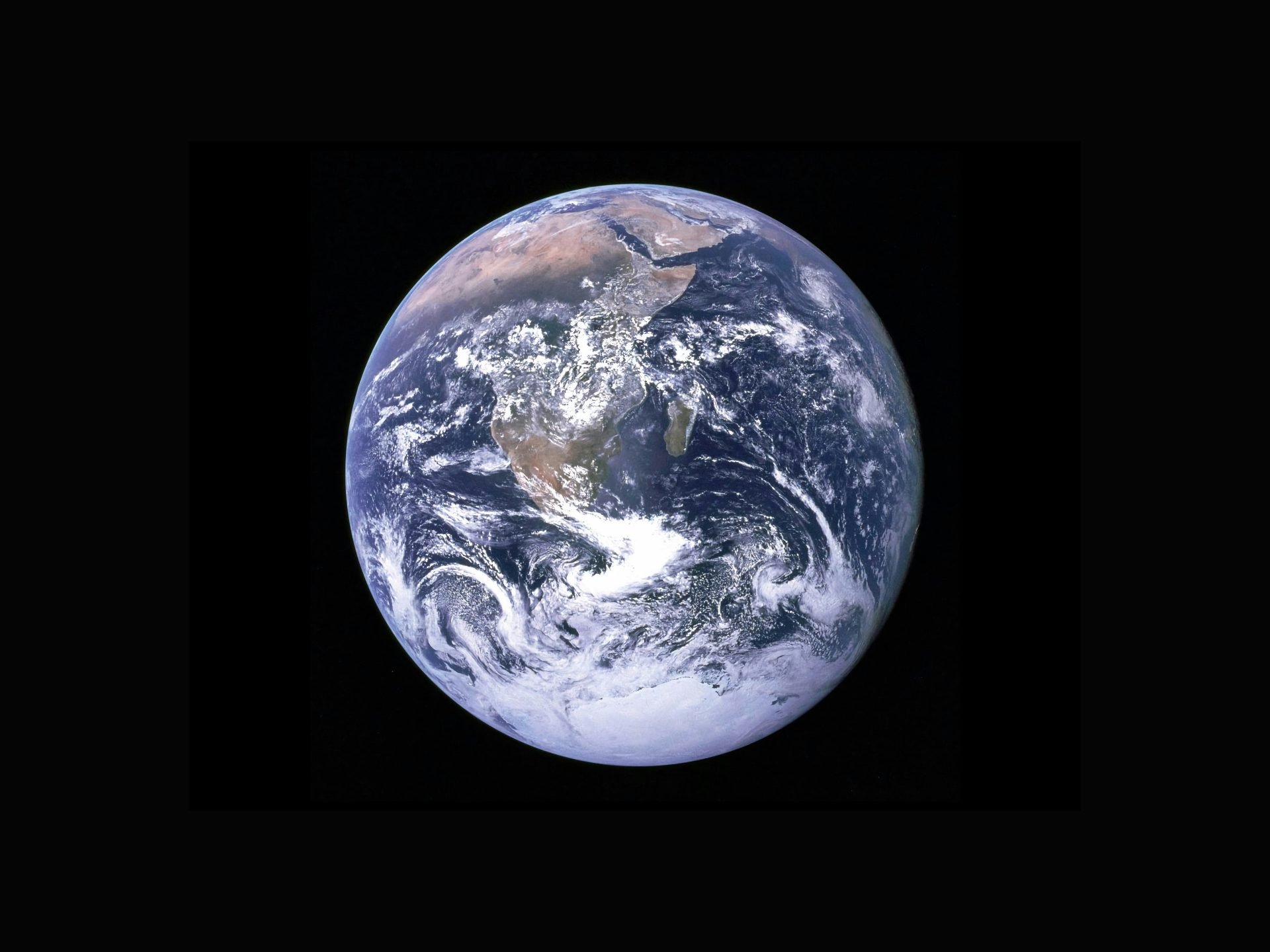

The general consensus on Earth’s age is 4.54 billion years, give or take 50 million years. This was determined in the 1950s, and it’s what most scientists and renowned publications have stuck with till today. However, different cultures don’t share a similar opinion. For instance, Christians believe that the Earth is about 6,000 years old. On the other hand, Hindus are convinced that Earth is 155.5 trillion years old. With all these highly varying figures flying around, it’s not easy to tell the Earth’s actual age. Luckily, in today’s post, we’ll clear the air and provide a more accurate birthday for planet Earth.
Early Human Efforts to Determine Earth’s Age
For as long as humanity has existed, there have been uncountable attempts to figure out how old the world is. Aristotle, for instance, claimed that time had no beginning or end, and it is the same assumption he made for Earth.
Fast forward to the 1700s and 1800s, when humans started utilizing advanced technology. Scientists tried to calculate Earth’s age using the ocean’s chemical evolution, sediment accumulation, and other factors. It was not until the discovery of radiometric dating in the 1900s that tangible results were observed.
Earth’s Age Based on Radiometric Dating
Radiometric dating refers to testing the decay of radioactive elements such as rocks and minerals. What scientists do is measure the ratio of daughter to parent isotopes in a sample and determine how much time has passed since that material was formed.
Scientists have not only used radiometric dating to calculate the age of the Earth but have also been done on the moon and samples of other foreign bodies. Rocks brought from the moon during the Apollo and Luna missions dated back to 4.4 to 4.5 billion years ago. This confirmed the age estimated by scientists.
The figure 4.5 billion was estimated by Clair C Patterson, a geologist from the California Institute of Technology. His name may sound familiar because he was also part of the Manhattan Project that was tasked with creating the atomic bomb.
Using radiometric dating, he calculated the isotopic composition of lead from a meteorite believed to have been from the material that formed the Earth’s crust. Other geologists have confirmed Patterson’s estimation of Earth’s age and have refined it to 4.54 billion with a variation of plus or minus 50 million years.
Why the Radiometric Dating Estimates Might Be Wrong
As much as scientists may argue that the above age is accurate, we must consider tectonic plate changes. The first rocks that used to cover the Earth have melted and reformed. As such, the Earth may be way older than that.
The other issue relates to the Great Unconformity. This is when some layers of rock seem to be missing. Take the Grand Canyon, for example, is missing 1.2 billion years of rocks. Great Unconformity can be caused by various reasons, such as glaciers that may have obliterated rocks channeled to Earth’s interior.
Keep in mind that there are a couple of rocks that have different ages. The oldest rock on Earth was discovered near the Great Slave Lake in northwestern Canada and was dated to be 4.03 billion years old. Other rocks, such as the Isua supracrustal rocks, have been dated to be 3.7 to 3.8 billion years old. At the same time, geologists have also discovered a 7 billion-year-old stardust on Earth. Therefore, there are a lot of variables in play.
When Did Life on Earth Begin?
While exploring how old the Earth is, identifying when life began is imperative. Because that would paint a much clearer picture and end this debate. Scientists claim that the earliest forms of life existed 3.7 billion years ago, and their fossils can be traced back to natural rock forms. However, life could have existed much further back.
As for the universe, it is believed to be 13.8 billion years old. The Milky Way, the galaxy our planet is in, is 13.2 billion years old. Going with the above theory, it would be safe to agree that Earth was formed from the rotation of a cloud of gas and dust called the solar nebula. It collapsed into itself and flattened to create a disk shape.
Will Earth Exist Forever?
Even though Earth has lasted for 4.54 billion years, scientists claim there are at least 3 billion years left for it to survive. They claim that at around 7.59 billion years, the sun will have exhausted its hydrogen and will switch to helium. As a result, it will become more prominent and hotter, thus engulfing Earth and Mars. As for human life, it is estimated to end much sooner in around 1.3 billion years. The sun’s natural revolution and human-made climate change might drive humankind and other living organisms to extinction.