

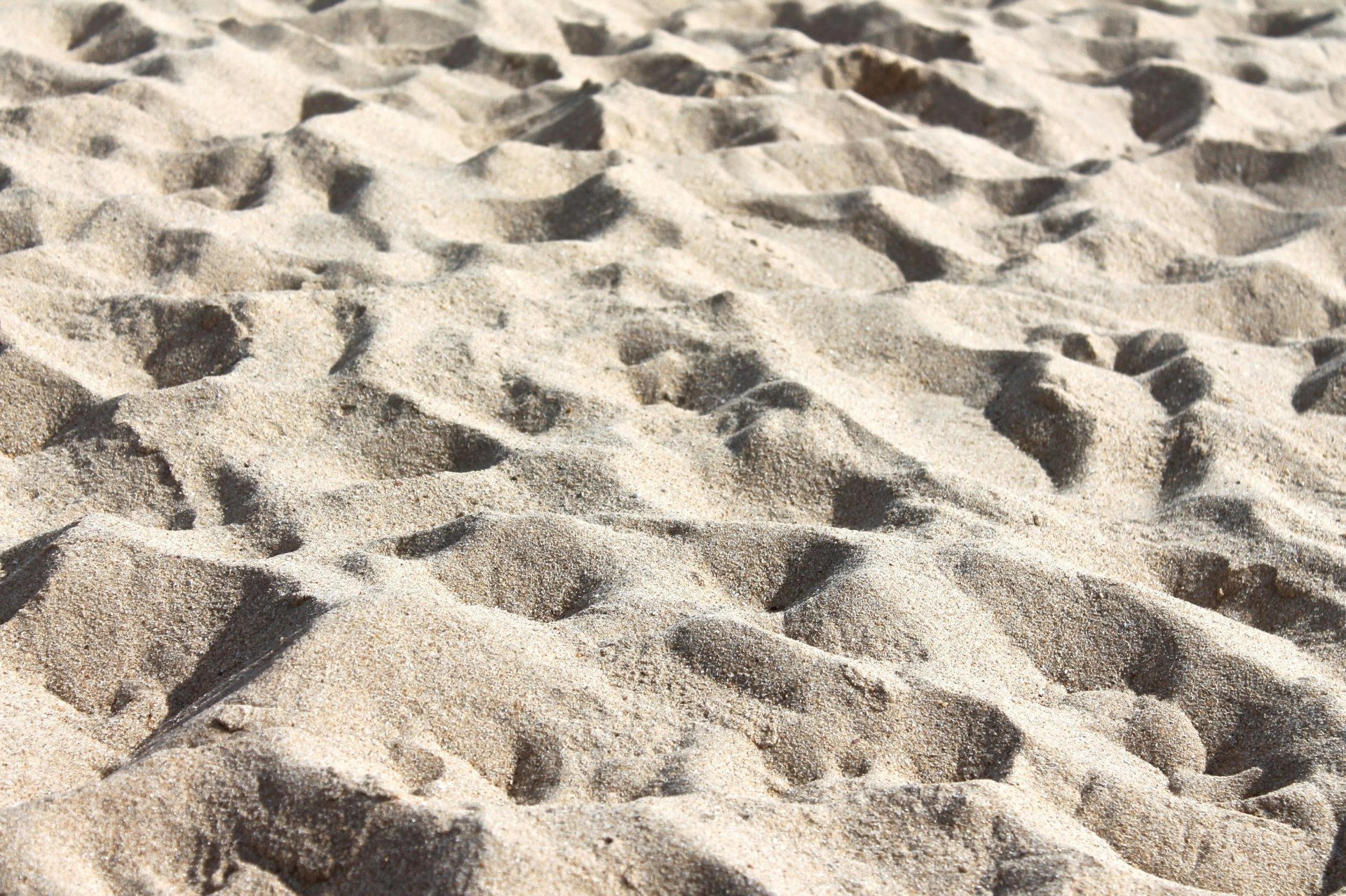

Sand is a combination of small pieces of rocks and minerals. Geologists consider it to be any granular mineral substance that has a diameter of 1/16 of a millimeter to 2 millimeters. It has a wide range of uses ranging from construction to agriculture. If you have always been fascinated by sand and its many characteristics, here are some interesting facts about it.
1. Desert Sand Can’t Be Used for Construction

According to building experts, desert and sea sand lacks the compressive and tensile strength for construction. As such, it can’t be used in buildings. This is why countries such as the UAE must import sand from other countries, such as Australia, despite having access to lots of desert sand.
2. Most Trains Use Sand to Improve Traction
Trains are fitted with an object called a sandbox. Its purpose is to hold and drop sand in front of the wheels to improve traction on the rail. This sand is often released when traveling on wet surfaces or steep areas where traction is heavily needed.
3. Illegal Sand Mining is the Largest Criminal Activity in India
India is being ravaged by illegal sand mining to the extent that it has been dubbed the largest organized criminal activity in the country. This crime is being facilitated by corrupt police officers, local governments, and a bunch of contractors.
Over time, illegal sand mining has led to the rise of sand mafias who are not afraid to use violence to gain their hands on tons of the construction materials. The sand in India is being extracted from beaches, riverbeds, and open pits. Unfortunately, this is one of the leading causes of major environmental issues, such as the partial disappearance of the beach.
4. Sand is a Finite Resource
Sand is not just in high demand in India but is a worldwide necessity. The problem is that sand is finite, and we are exhausting it. Sand reserves across the globe are dwindling, posing a challenge to future construction works. At the moment, sand is one of the most mined commodities.
5. There are More Stars Than Grains of Sand on Earth
It is estimated that the world has 7.5 sextillions of sand grains. On the other hand, there are about 200 billion trillion stars in the universe. This means there are more stars than grains of sand on Earth.
6. The Colosseum’s Floor was Covered with Sand to Absorb Blood
Gladiators would spill lots of blood at the Colosseum during their annual “games”. To facilitate easy absorption of blood, the floor of the Colosseum was covered with sand. Also, sand created the ideal surface for horses to walk on. Beneath the sand was a wooden floor.
7. It is Illegal to Take Sand from a Beach in the UK
In the United Kingdom, people are not allowed to take any natural materials from the beach. This includes sand, pebbles, seashells, rocks, and plants. Doing so can lead to a £1000 fine.
8. The Sphinx in Giza was Once Buried in the Sand
For a long time, the Great Sphinx in Giza had been abandoned and was completely submerged in sand. It was not until 1400 BC that Thutmose IV led the first excavation.
9. Parrotfish Poop Sand

One of nature’s wonders is how the Parrotfish poops sand. What happens is that Parrotfish feed on algae from rocks. They ground it with parrot-like beaks and then digest it in their guts before it is excreted as sand. It’s this sand poop that has created the famous white-sand beaches in Hawaii. Because of their sand poop, Parrotfish are an ideal species to have in waters near beaches.
10. Islands in Indonesia Have Disappeared Due to Sand Mining
Just like in India, sand mining is also a huge problem in Indonesia. These activities have led to the disappearance of several small islands from the region’s map. Sand mining has been a problem in Indonesia since 2005.
11. There is a Type of Therapy That Uses Sand
Psychologists and therapists sometimes recommend sand play therapy to children diagnosed with mental health issues. Here, the children are provided with a sandbox and some toys, which they use to create miniature worlds that portray their struggles, concerns, or thoughts. This nonverbal form of therapy is known to be quite beneficial.
12. Ostriches Bury Their Heads in Sand to Rotate Their Eggs
The story about ostriches burying their heads in the sand to hide is a myth. Because ostriches can’t fly, they lay their eggs on the ground, not trees. Occasionally, they bury their heads into the ground to rotate the eggs and ensure they are evenly heated.
13. Only 25% of the Sahara is Made up of sand
Most people assume that the entire Sahara desert is covered by sand. This is false. Only 25% of the Sahara is covered in sand; the rest comprises salt flats, bare rock, and gravel.
14. There is Pink Sand
The common colors associated with sand are white and light yellow. However, there is also pink sand. It is mostly found on tropical beaches that are close to coral reefs. This sand gets its color from an organism called red Foraminifera. It has a red shell, which turns pink when the organism dies.
15. Camels Have Three Eyelids to Protect Them from Sand
Unlike other animals, camels have three eyelids. The reason for that is to protect their eyes from the sand in the desert, which is the common habitat of this species.
16. Taketomi Beach Has Star-Shaped Sand
Sand grains are known to be round. However, at Taketomi Beach in Hatoma, the sand here is star-shaped. Japanese mythology states that this star-shaped sand came from the descendants of the North Star, who fell from the sky and were killed by the god of the sea. However, scientists believe these star-shaped sand are the skeletons of an organism called Foraminifera.