

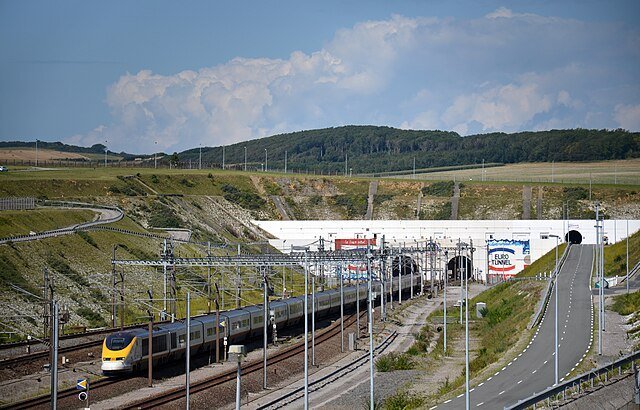

Being one of the wonders of the modern world, there are a lot of interesting facts about the Channel Tunnel. Launched in 1994, the Channel Tunnel brought the world to a standstill. It is an engineering wonder that comprises of a 50.5km railway tunnel dug under the sea bed connecting the UK to France from Folkestone in Kent to Pas de Calais.
The Channel Tunnel serves millions of passengers and cargo every year, bringing numerous economic and social developments to both countries. If you’ve recently discovered the Channel Tunnel and you’re wondering what makes it so special, here are some mind-blowing facts about it.
How the Idea to Build the Channel Tunnel Started
The French and English governments weren’t the first to think about connecting these two countries. Before the Channel Tunnel was built, most people used ferries and boats to cross from Calais in France to Dover in England.
Being a long and tedious journey, various leaders, including Napoleon, contemplated building a channel between these two countries. However, the first proposal for this concept was made by Albert Mathieu-Favier, a French engineer, in 1802. According to Favier, this channel would also include an island where passengers would switch horses. At the time, horses were the primary means of transportation. Unfortunately, Favier’s proposal was dismissed because both countries were busy fighting the World Wars.
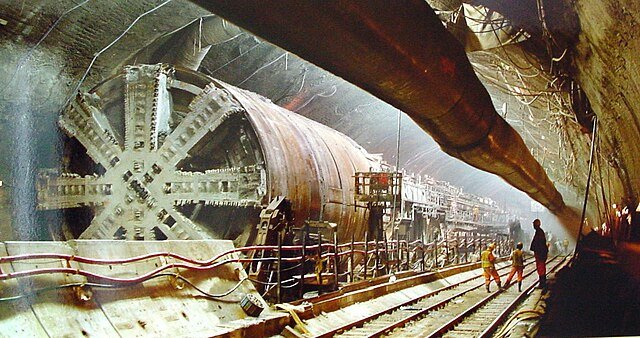
When things calmed down in the 1980s, parliaments from both camps came together and decided to build the Channel Tunnel. The contract was awarded to five French and five British companies to guarantee fairness; a whooping £4.65 was pumped into this project. Financial experts estimate the cost of building the Channel Tunnel to be $12 to $15 billion according to current rates.
What Makes The Channel Tunnel Special?
Many things make the Channel Tunnel special. To begin with, it was built by 13,000 people, accounting for both skilled and unskilled labor. That’s wild because the Burj Khalifa, the tallest building in the world, only employed 12,000 workers. As if that’s not interesting enough, the Channel Tunnel is 31.35 miles long, and 23.5 miles of this tunnel is underwater. That makes it the longest undersea tunnel in the world. Some sections of this tunnel are located 250 ft under the sea bed.
Initially, people used ferries to travel from Britain to France; a one-way trip would take at least 90 minutes. However, thanks to the Channel Tunnel, that time has been reduced significantly. Passengers can either travel through the channel by a train known as the Eurostar. This train reaches up to 100 miles per hour, ensuring passengers arrive at their destinations in 35 minutes.
Alternatively, they can drive through the channel using personal cars, coaches, vans, or buses. It’s also worth mentioning that this channel facilitates cargo movement via freight services. This has improved trade between these two countries and many others that use this route to transport goods and commodities.
How the Channel Tunnel Improved Transportation between England and France
For those who found the Channel Tunnel facilitating movement between France and the UK, it’s easy to overlook its impact on transportation. However, before it was built, transportation between these two countries was quite inconvenient.
Unless one was traveling by air, ferries posed many challenges for passengers and private vehicles. Scientists have proven that traveling through the Channel Tunnel via train produces 90% less greenhouse gas than flying. It has also reduced the traveling time, making this journey more affordable for passengers.
As useful as the Channel Tunnel has been to consumers, investors may have a different opinion. One crucial detail that most people don’t know about this project is that it was privately financed despite being launched and overseen by both governments.
Challenges Facing the Channel Tunnel
Over the years, the escalated construction costs have burdened investors, leading to financial constraints. For instance, in 2007, when the Channel Tunnel was being restructured, the governments had to write off a debt of £3,400 million, significantly reducing the stakes of shareholders. However, as this channel became more popular, it generated more revenue, which was used to pay out dividends to the investors.
Finances aside, this channel has also been affected by several things. For instance, in 1996, a fire broke out in the train and severely damaged the train and the tunnel, leading to costly repairs. Fortunately, the passengers were saved from this incident. Also, since its launch, the Channel Tunnel has been used by illegal immigrants to get into the United Kingdom. While several hundred have made it through, this channel has now been equipped with advanced technology and security measures that prevent the illegal entry of immigrants in both countries.
vehicles cannot drive through the tunnel