


13. Mongolia, 1939 – Deep Battle
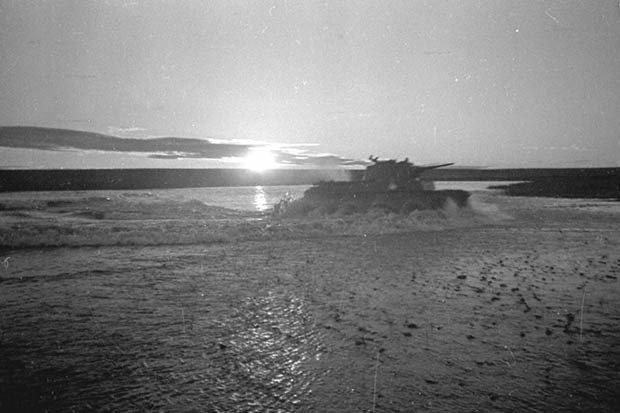
A BT-7 tank of the Red Army fords the Khalkin-Gol during the Battle of Nomonhan in 1939. The Red Army under Georgy Zhukov smashed a Japanese attempt to seize a disputed stretch of the Mongolia-Manchukuo border. The Soviet victory validated the Red Army’s concept of “deep battle” and convinced the Japanese to abandon the “Northern Strategy” against Russia and instead fix their eyes on European and American possessions in the Pacific, culminating in the attack on Pearl Harbor two years later. Zhukov would lead the Soviets into Berlin six years later.
14. Moscow, 1941 – Do or Die
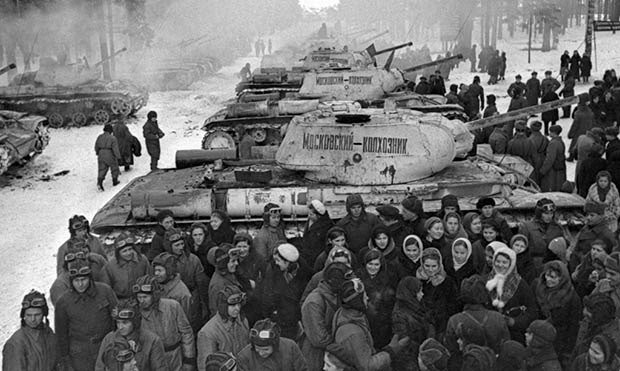
Citizens of a Soviet collective farm hand Red Army tankists their new mounts, as they prepare to go into battle against the Nazi invaders. A surprise attack by Nazi Germany brought Nazi forces to within 23km of the Kremlin, but was halted by a tenacious Soviet defense. Stalin prepared his train for evacuation, but then decided to stay to shore up the defense. If the Germans wanted a war of extermination, Stalin declared, they would have one.
15. Valjevo, 1942 – Defiant to the End
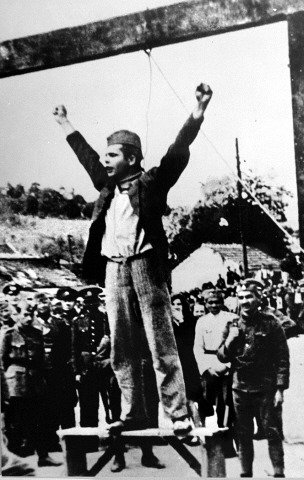
Stjepan Filipović, a Croatian Communist partisan, yells “death to fascism, freedom for the people” just before he is hanged by collaborationist forces. The Yugoslav partisans were one of Europe’s most effective resistance movements, with their own Navy and Air Force. After the war they would take control of Yugoslavia and build Europe’s most successful Communist state, under the watchful eye of their leader, the charismatic Marshal Tito.
16. Stalingrad, 1942 – Nemesis
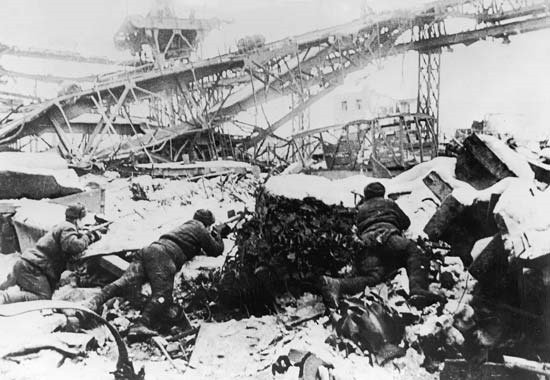
The Soviet Union and the German Reich fight over this city on the Volga in the decisive battle of WWII. By the time the guns fall silent in February 1943, both sides have suffered over one million casualties – but Stalingrad is held, and with the Soviet victory, the tide of war turns.
17. Kursk, 1943 – Girls Just Wanna Defend the Motherland
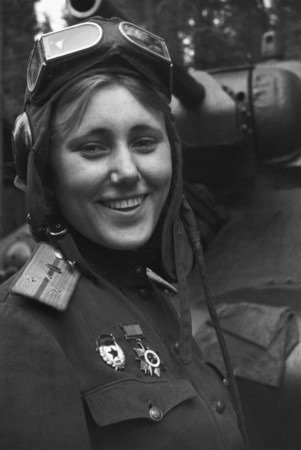
Aleksandra Samusenko poses in front of her T-34/76 sometime during WWII. Samusenko won the Order of the Patriotic War 1st class and the Order of the Red Star during the giant tank battle of Kursk, and was the only female tank commander in the entire 1st Guards Tank Army. She was one of 800,000 Soviet women who served in the Red Army during WWII. She was killed in action in 1945.
18. Greece, c. 1941-5 – The Resistance Lives On!
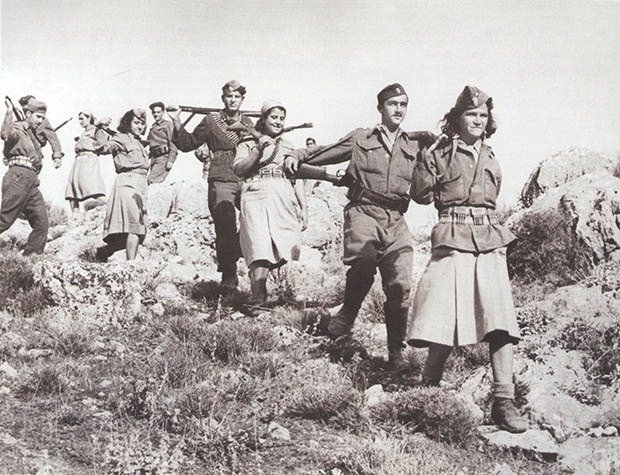
Greek resistance fighters of ELAS, the military wing of the communist-led EAM, during WWII. ELAS was the main force in the Greek resistance. As the German hold on Greece frayed, the various resistance groups began fighting each other for postwar control of the country. These tensions would eventually lead to the Greek Civil War of 1946-49.
19. Torgau, 1945 – United in Victory
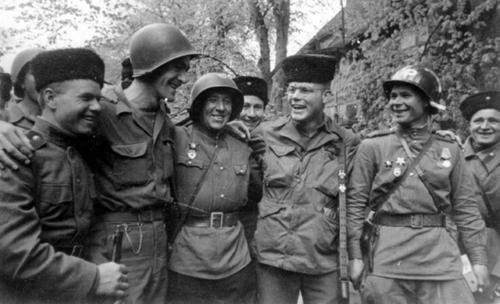
April 25th 1945 – “Elbe Day”: Soviet and American soldiers meet in Torgau on the River Elbe, completing the encirclement of what is left of Nazi Germany. Five days later, Hitler shot himself, and a week after that, Germany surrendered. I love this picture. The American and Soviet soldiers in this picture are trying on each others’ hats. It’s quite touching.
20. Berlin, 1945 – Fall of Eagles
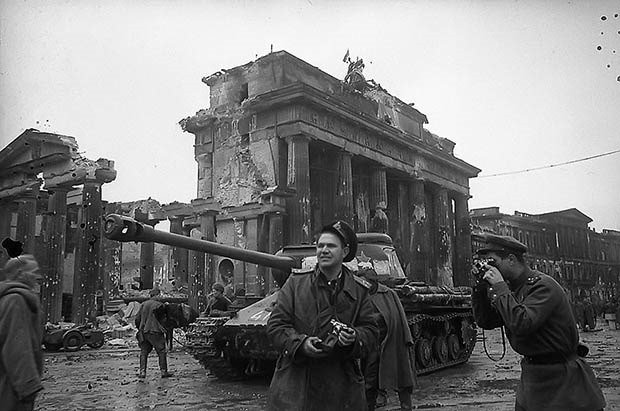
Soviet soldiers take souvenir photos before the Brandenburg Gate in Berlin. The Soviet Army defeated around three-quarters of Axis forces in Europe. It had been a long and hard road between the trenches outside Moscow to the raising of the Red Banner above the Reichstag, but Soviet victory established the USSR as one of the world’s two superpowers, and sowed the seeds of the Cold War that was the focus of world’s attention for the next fifty years.
21. Moscow, 1945 – The Sacred War
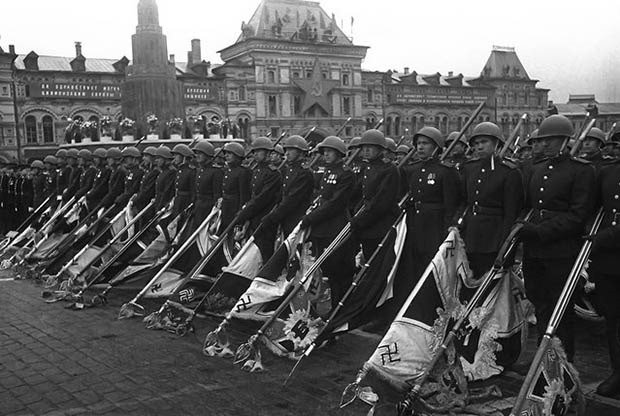
Soviet soldiers lower German captured Nazi standards onto the ground, symbolizing the defeat of Nazi Germany and the USSR’s resurgence as a great power of the postwar age. Ever since, May 9th has been celebrated as Victory Day in Russia and parts of Eastern Europe.
22. Dalian, 1945 – Ten Thousand Kilometers from Tip to Tip
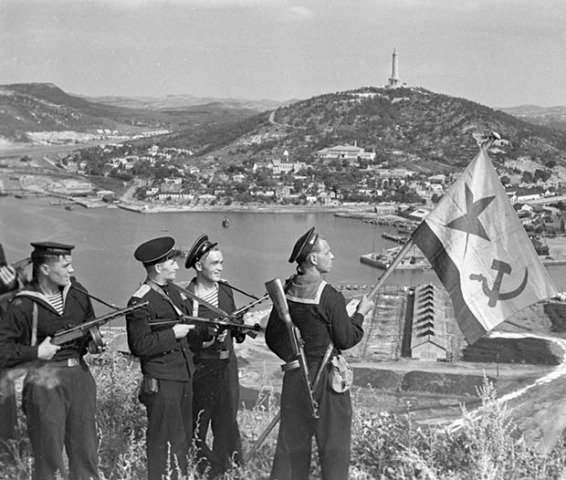
Soviet marines raise Soviet naval ensign over Dalian in China, after the Soviets destroyed the Japanese Kwantung Army and liberated Northern China and Korea from Chinese control. With them came a young Korean guerrilla commander named Kim Il-sung, who led the Soviet administration of northern Korea and became Great Leader and later “Eternal President” of the Democratic People’s Republic of Korea, or as we know it today: North Korea.
23. Hanoi, 1945 – The End of the Beginning
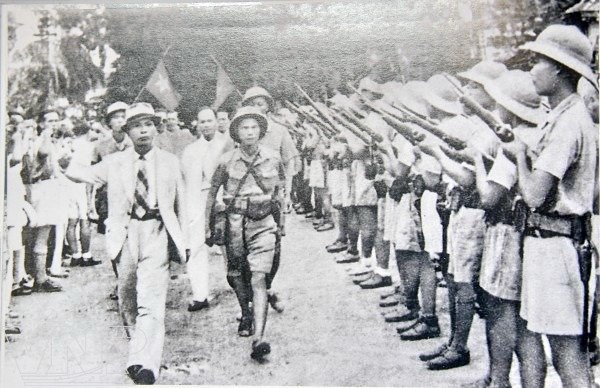
Vo Nguyen Giap inspects troops of the Viet Minh during the August Revolution in Vietnam, as the Viet Minh threw out the Japanese occupiers and set the stage for a guerrilla war with their old colonial masters, the French and the chaotic division that would plague Vietnam for the next thirty years.
24. Beijing, 1949 – The East is Red!
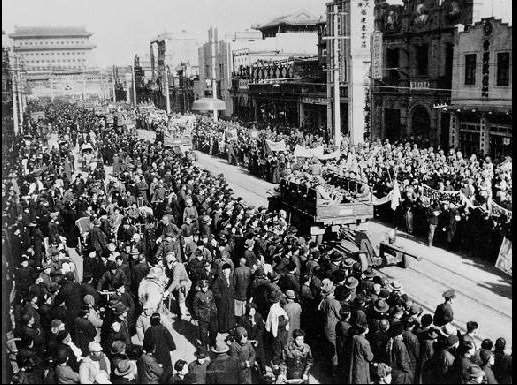
The arrival of the People’s Liberation Army in Beijing. Exhausted by their long war against the Japanese and driven with corruption and factionalism, the Nationalists’ China dies not with a bang, but with a whimper. The KMT flees to Taiwan; De jure, their “Republic of China” encompasses all of China proper, Mongolia, Tibet, and parts of India, de facto it is a small yet prosperous island nation. Yet it avoided the chaos and collapse that prevailed in Red China until the end of the Mao era.
25. Korea, c.1950-1 – A Colder War
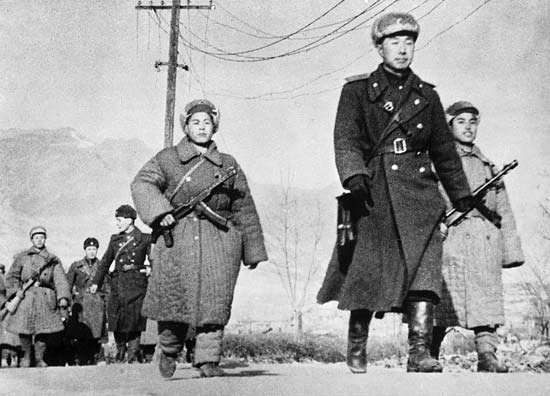
The Korean People’s Army on the march in the winter of 1950-51. After the superpowers divided Korea, both set up their own puppet regimes in the North and South. Expecting the US to abandon Korea, Stalin and Kim Il-sung invaded the South in 1950, pushing South Korean and US forces back to a tiny perimeter around the town of Pusan. However, Douglas MacArthur’s landings at Inchon swiftly turned the tide, and the North Koreans were pushed all the way back to the Yalu river and only saved with Chinese intervention.