


13. Luanda, late 1970s – Free at Last
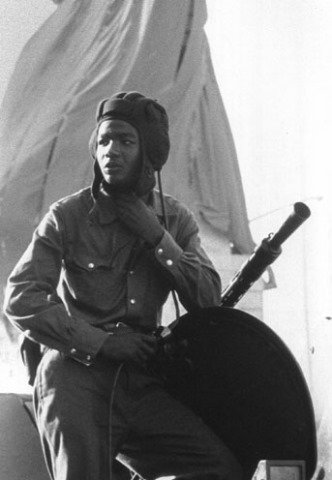
An armored vehicle crewman of the Angolan MPLA relaxes on top of his BTR in front of a Portugese statue covered with a cloth. After Portugal granted its African colony independence following the Carnation Revolution, a 26-year civil war broke out between the pro-Communist MPLA and the Western-backed UNITA. The MPLA moderated their position from Marxism-Leninism to social democracy in 1991, and a ceasefire and political settlement was finally achieved in 2002.
14. Phnom Penh, 1979 – Deliverance
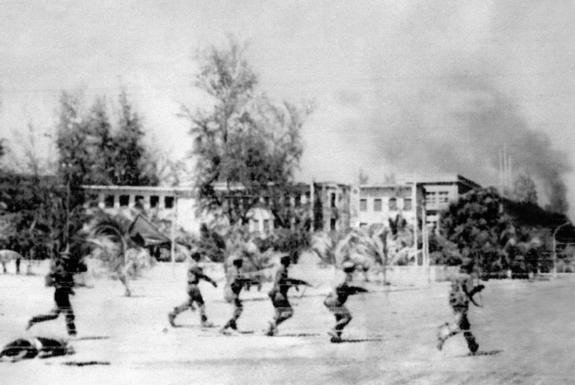
Vietnamese soldiers charge into action in Phnom Penh. For reasons that doubtless seemed like a good idea at the time, Cambodia launches a series of incursions and provocations along the Vietnames border. In December 1978, Vietnam finally tires of their sh*t and invades, taking Phnom Penh, occupying the country, and stopping the slaughter of the Cambodia genocide in less than a month. Turns out killing your own population makes you lousy at war. Who knew? The Khmer Rouge continued to hold Cambodia’s seat at the UN until 1993 with the backing of a variety of countries. This included the USA, who kept them there to punish Vietnam, which is possibly one of the shiteyest things the USA has ever done.
15. Managua, 1979 – The Sandinistas Cometh
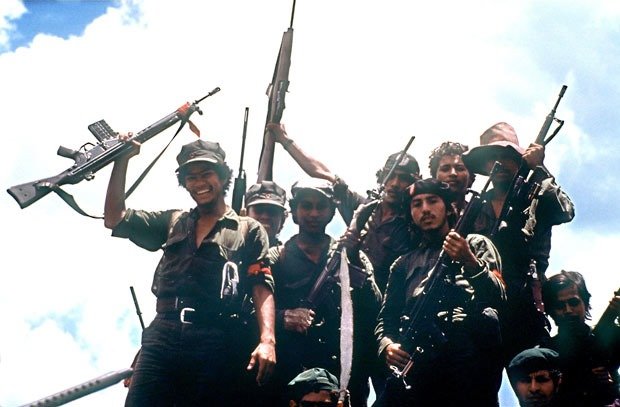
Nicaraguan Sandinistas enter the city of Managua in triumph, defeating the forces of military strongman Anastasio Somoza Debayle and taking over the country. No sooner had they won, however, than a US-backed counter-revolution broke out. The “Contras”, as they became known, were financed by drug-dealing and the proceeds of illegal arms sales to Iran.
16. Bamiyan, 1980 – The Bear Trap
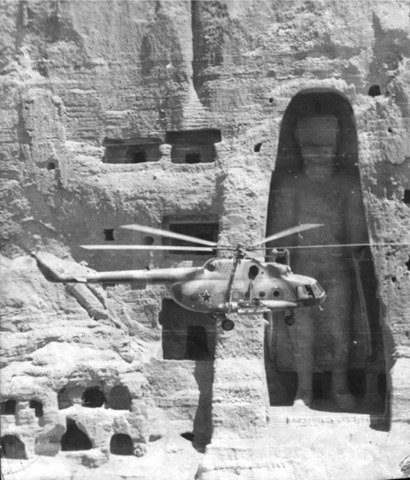
A Soviet helicopter flies past the Bamiyan Buddhas in 1980. The Soviets made heavy use of helicopters to supply their various outposts in the Afghan highlands – but the increasing prevalence of foreign-supplied MANPADs among the mujahideen made this increasingly risky. The Buddhas, a UNESCO World Heritage Site, were destroyed by the Taliban, because the Taliban suck.
17. Warsaw, 1981 – The Generals Speak
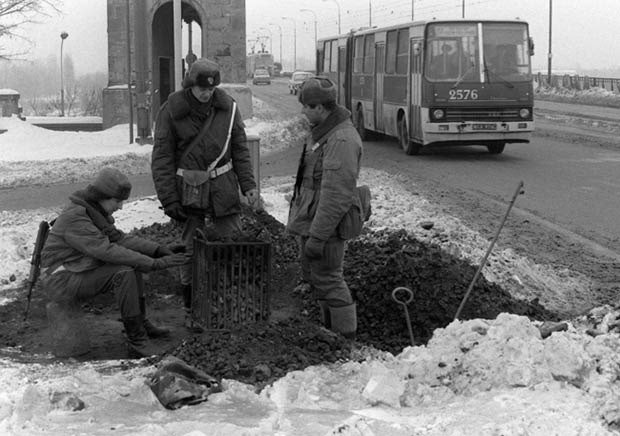
Polish soldiers stand around a fire at a position on Poniatowski Bridge in Warsaw during Poland’s martial law period. In 1981, with the Solidarity trade union organizing strikes and demanding reform, the Soviet Union pressured Poland’s government to crack down. It did, with the armed forces instituting martial law, ostensible to “save” Poland from Soviet invasion.
18. Cuito Cuanavale, 1987 – Cry Havoc!
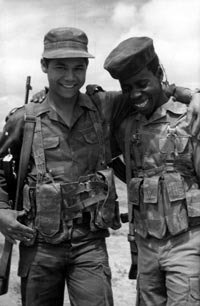
Cuban soldiers hug during the Battle of Cuito Cuanavale in 1987. Cuito Cuanavale saw an Angolan and Cuban advance halted by the army of apartheid South Africa. However, the South Africans proved unable to consolidate their early victory, and a stalemate that both sides claimed victory in.
19. Kabul, 1988 – Nobody, but us!
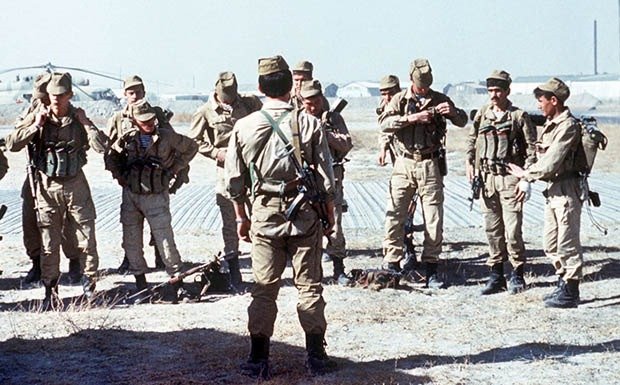
Soviet Spetsnaz at Bagram airfield prepare for a mission to hunt down mujahideen in 1988. The Spetsnaz played a very active role in the USSR’s war in Afghanistan, and were some of the more successful Soviet military units in the country. Over 14000 Soviet soldiers died in over nine years of war.
20. Afghan highlands, 1988 – Patrol and Patrol and Patrol
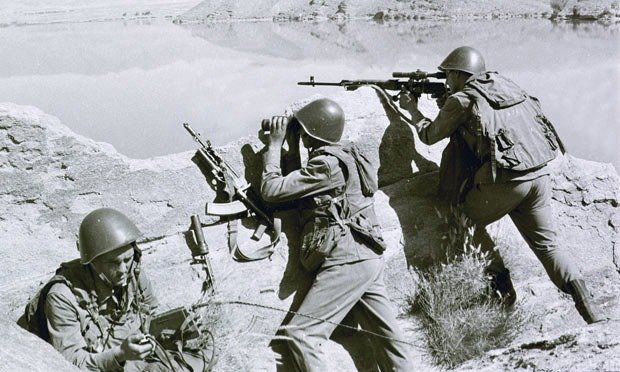
Soviet troops take the fight to the Mujahideen in the Afghan mountains. Sensing an opportunity to entangle the Soviets in an unwinnable military adventure and get revenge for Soviet support of Hanoi during the Vietnam War, Jimmy Carter’s administration launched Operation Cyclone, a program of arms supply to the Afghan rebels.
21. Termez, 1989 – The Graveyard of Empires
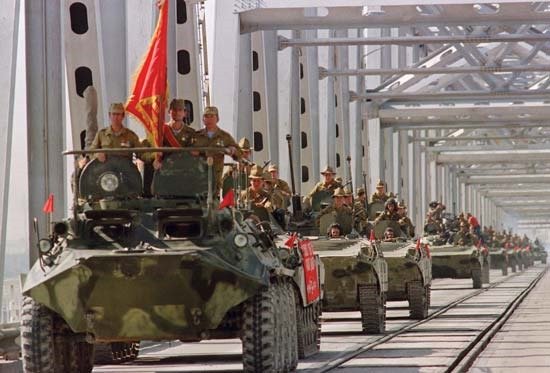
The Soviets leave Afghanistan after their decade of war. Although they left behind a capable Afghan state, the collapse of the USSR a year later would throttle its funding, leaving it defenceless before the Taliban. For many Soviet soldiers and citizens, it had been a decade of bleeding and killing for no palpable reward. The Graveyard of Empires had claimed another victim.
22. Beijing, 1989 – Reason in Revolt now Thunders
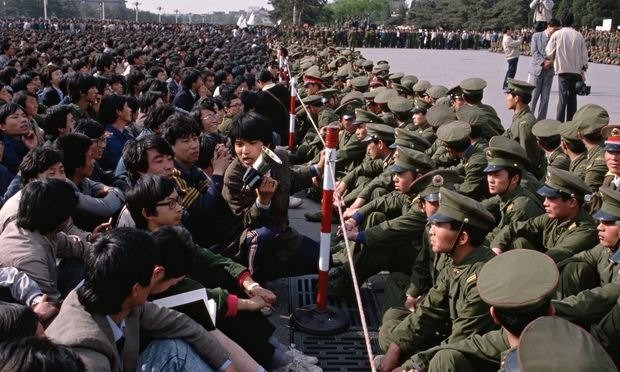
Chinese soldiers face hunger-striking students demanding political liberalization and social justice in Tiananmen Square in 1989. Inspired by similar movements across the Communist world, Chinese students and workers mobilized and presented their leaders with a variety of grievances. They would pay a terrible price for their optimism.
23. Beijing. 1989 – Bloody Trails
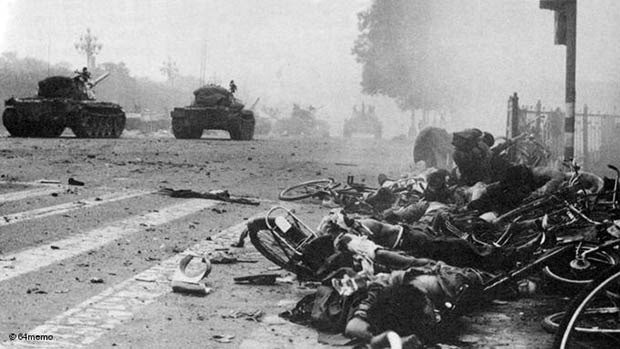
The Chinese Communist Party, after wavering for months, meets the demonstrators in Beijing with force. With the world watching on its TV screens, the People’s Liberation Army attacks the demonstrators with armored vehicles and gunfire. Similar scenes occur in other Chinese cities. The bulk of the deaths in Beijing actually occurred away from the Square, but the violence would become known to the world as the Tiananmen Square Massacre.
24. Berlin, 1989 – Bruderlich mit Herz und Hand!
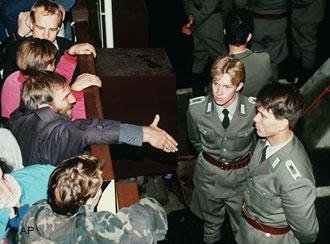
Two East German Border Guards look bemused as a West Berliner tries to shake their hand during the night of 9 November 1989. That afternoon, the spokesman for the East German government, Gunther Schabowski, had announced that new, freer border controls would be implemented. When asked, he replied: “As far as I know – immediately.” Within a day, thousands of East Germans swarmed border crossings demanding to be allowed to cross. Families were reunited, champagne drunk, and kisses exchanged as the vast edifice of European communism comes crashing down.
25. Bucharest, 1989 – Deșteaptă-te, române!
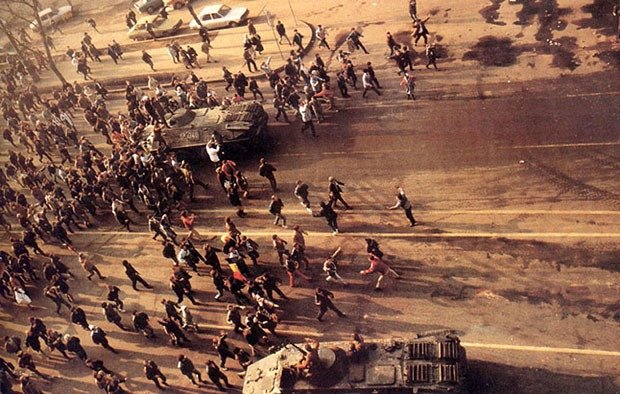
Protesters stride past Romanian Army armored vehicles during dmonstrations against Romania’s communist president, Nicolae Ceaușescu. The protests began in the city of Timisoara and spread throughout the country; in response, Ceaușescu tried to make a speech in Bucharest on 21st December. Used to quiet, officially picked, crowds, Ceaușescu was stunned as the crowd began to boo and jeer him – his public meltdown at the lectern, was captured on live television and became an iconic image. The next day, he fled by helicopter, as the Army refused orders to crush the revolution with lethal force and defected to the protesters.